
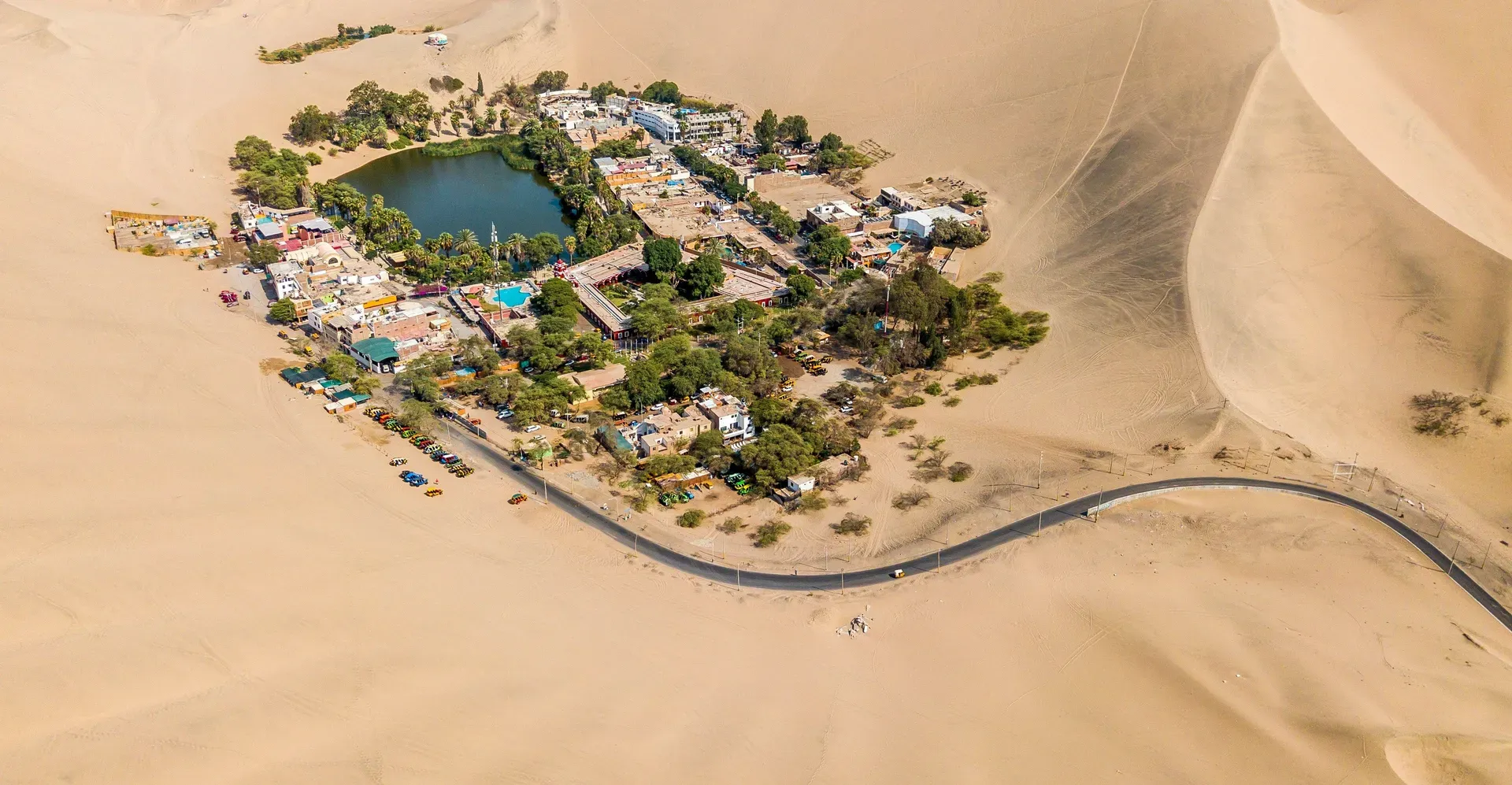
South America's only natural desert oasis sits 5 kilometers from the city of Ica, surrounded by sand dunes reaching 500 meters high. The village centers on a green lagoon fed by an underground aquifer, drawing travelers for dune buggy rides and sandboarding.
South America's only natural desert oasis centers on a green lagoon fed by an underground aquifer. Towering sand dunes, reaching up to 500 meters high, encircle the small village of Huacachina. Palm, eucalyptus, and carob trees grow directly out of the arid landscape, sustained by the subterranean water flow. The settlement sits just 5 kilometers from the city of Ica and roughly 300 kilometers south of Lima.
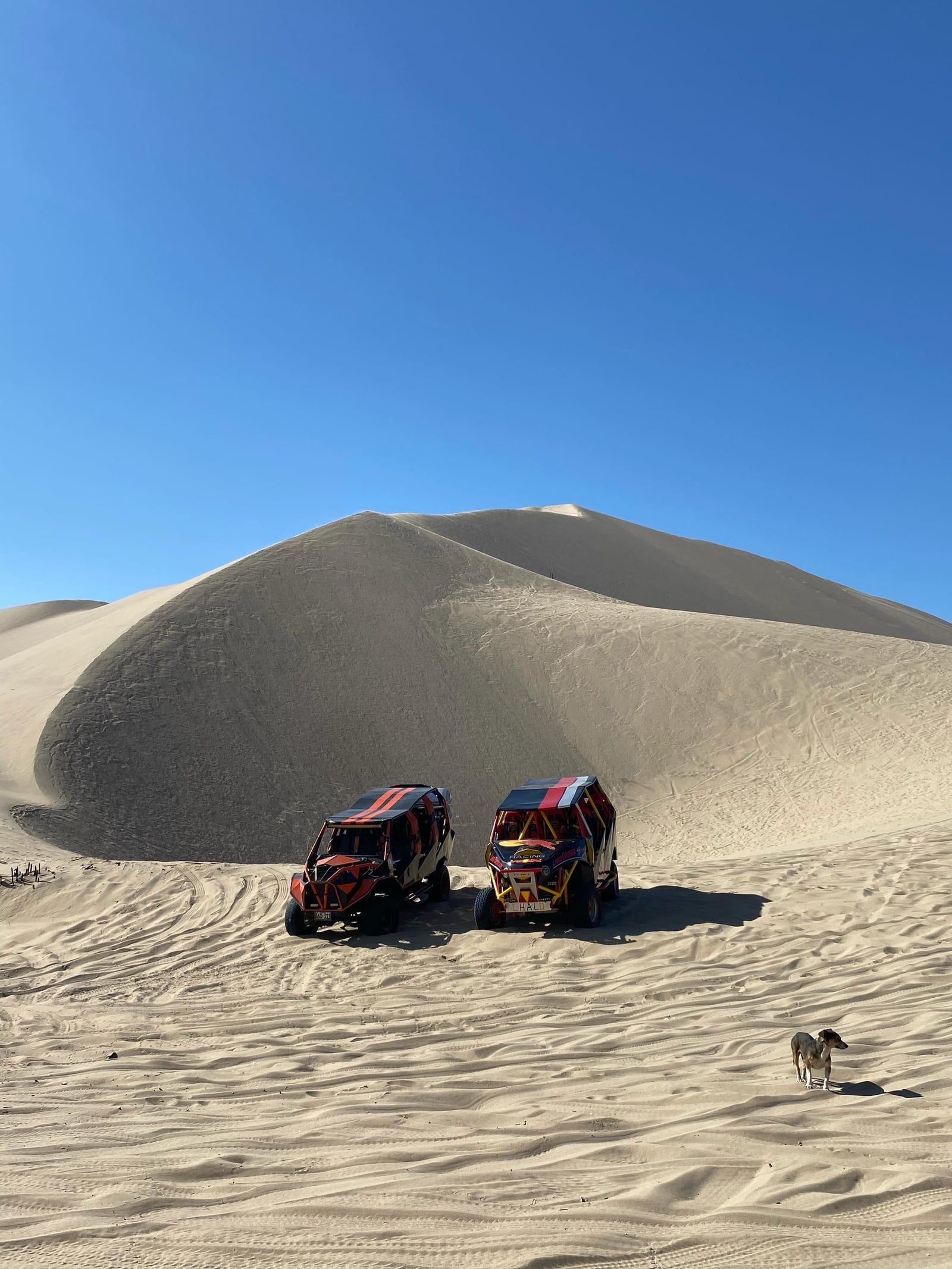
Visitors arrive to ride open-frame dune buggies across the steep sand banks and sandboard down the 1,600-foot drops. The climate is unforgiving. As a hot-desert (BWh) zone, the region receives barely 2 millimeters of rain annually. Temperatures climb to 30°C between December and March, bringing heavy afternoon haze and weekend crowds from the capital. April through October offers clearer skies and cooler sand.
The village itself consists of a few dozen buildings, a colonial-style boardwalk, and a permanent population of about 100 residents. Travelers walk the entire perimeter of the lake in under fifteen minutes. While the oasis remains open 24 hours a day, the most reliable time for dune access is during the 16:00 to 18:00 window. Buggy operators schedule their rides to catch the sunset over the dunes before the desert temperatures plummet.
Getting to the oasis requires a multi-step journey for most travelers. Scheduled intercity buses like Cruz del Sur depart from Lima's Javier Prado terminal, taking just under five hours to reach the Ica bus station. From there, a 15-minute taxi ride costing about 10 soles transports visitors into the dunes. Private tourist buses, such as Peru Hop, hold special licenses to bypass the Ica terminal and drop passengers directly at their oasis hotels.
Wheelchair accessibility remains highly limited due to the sandy terrain and lack of paved ramps. Elderly travelers can navigate the flat lakeside boardwalk in minutes, but climbing the dunes is not recommended. Families frequently visit, though parents must note that standard buggy safety harnesses are designed for adult frames. Toddlers under four require a private buggy driven at reduced speeds. Standard two-hour group buggy tours cost between $18 and $25 USD, while private vehicles run from $100 to $195 USD. Bring cash in Peruvian soles before leaving Ica, as the oasis lacks ATMs and card terminals often add transaction fees.
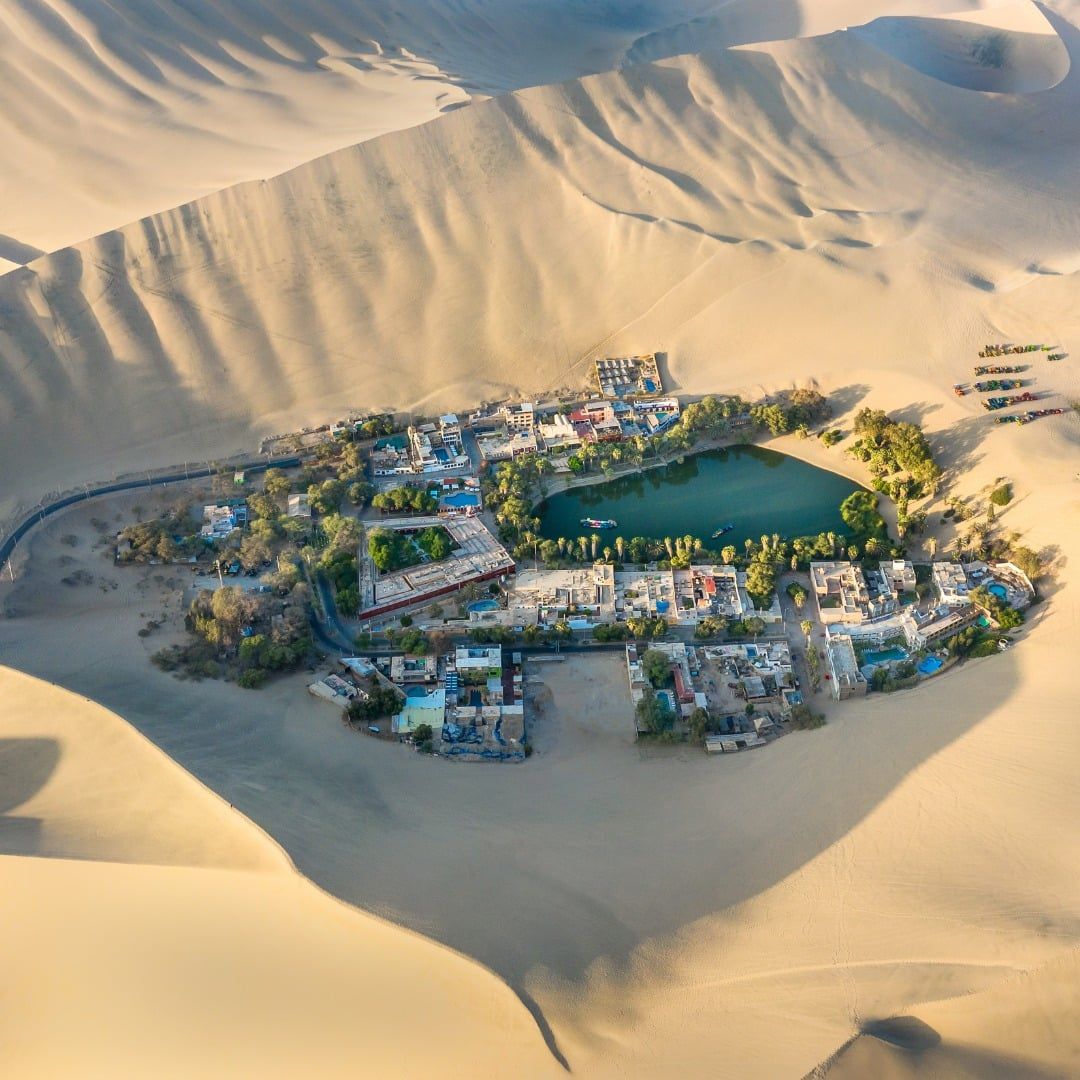
Subterranean currents carved out this fertile pocket long before human settlement. The underground aquifer pushed water to the surface of the Ica desert, supporting a dense ring of native vegetation. Early inhabitants of the region used the site as a gathering place among the otherwise barren coastal dunes. The oasis sits within a broader archaeological zone. Just 2.5 hours away, the Nazca Lines feature ancient geoglyphs etched into the desert floor, while 71 kilometers north, the Paracas National Reserve protects dramatic coastal cliffs.
During the 1940s and 1950s, wealthy Peruvians began traveling to the lagoon for medical treatments. Doctors at the time believed the sulfur-rich waters and thick mud held therapeutic properties. Patients bathed in the lake to alleviate symptoms of arthritis, rheumatism, asthma, and bronchitis. By the 1960s, developers transformed the site into an exclusive summer resort. Crews constructed a paved boardwalk, colonial-revival houses, luxury hotels, and a dedicated therapeutic spa. The Peruvian elite spent their summers rowing wooden boats across the water and dining on the terraces.
The resort era peaked and eventually declined as international travel became more accessible to South America's upper class. The spa closed. The grand hotels aged and changed ownership. In the early 2000s, backpackers discovered the massive dunes surrounding the quiet village and introduced sandboarding to the steep slopes. Local mechanics adapted tubular frames and V8 engines to create dune buggies capable of scaling the 500-meter sand walls. This mechanical innovation completely shifted the local economy from a quiet health retreat to a high-adrenaline destination.
Today, the site functions primarily as an adventure tourism hub. The Peruvian government designated the surrounding 2,407.72 hectares as a Regional Conservation Area under SERNANP to protect the fragile desert ecosystem. As visitor numbers surged, safety became a primary concern. A technical working group, established in October 2025, now regulates the buggy industry to enforce safety standards. Tourists should avoid unregulated street-sold tours, which lack proper insurance and basic safety harnesses. Verify your operator's license with the local mesa técnica before boarding any vehicle.
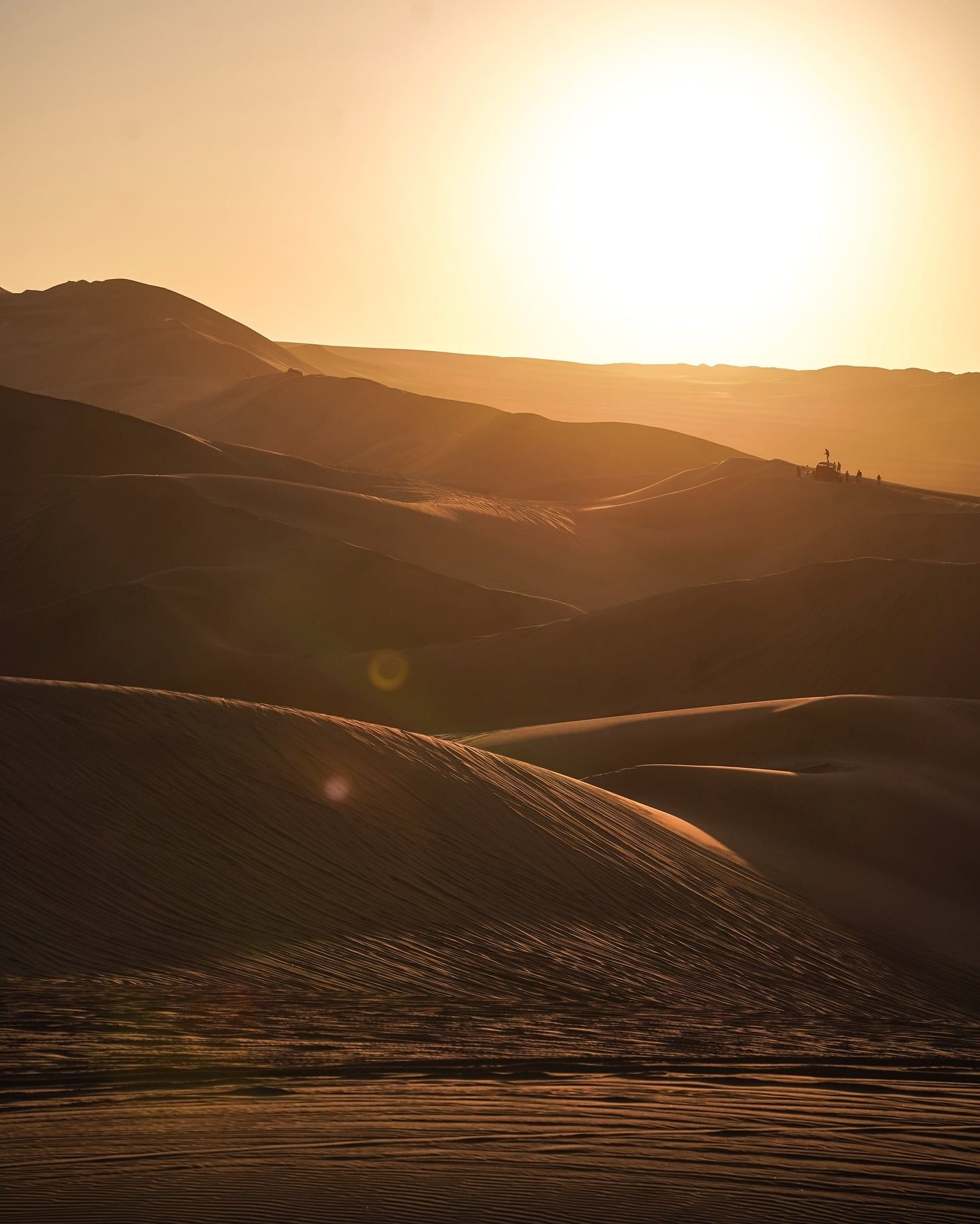
A 2,407.72-hectare expanse of sandy coastal desert isolates the village from the Pacific Ocean. The defining physical features are the massive sand dunes, which rise up to 500 meters (1,600 feet) above the central lagoon. Wind patterns constantly reshape these steep ridges, creating sharp crests and deep valleys of fine, golden sand. The climb up the dunes is physically demanding. Hikers sink backward with every step, requiring 60 to 90 minutes to reach the highest sunset viewpoints.
The central lake measures just over a hectare in size. Its distinctive green color comes from mineral deposits and algae growth in the stagnant water. Underground aquifers supply the moisture needed to sustain the perimeter of palm trees, eucalyptus, and native carob species. Because the water does not flow out of the basin, organic matter accumulates rapidly. Swimming is strongly discouraged due to poor water quality and the risk of illness. Visitors instead rent paddle boats or rowboats to navigate the calm surface.
Temperatures dictate daily activity in this BWh hot-desert climate. The sand absorbs and radiates intense heat by midday, making barefoot walking impossible. Visitors must wear closed-toe shoes and long trousers to prevent severe friction burns while sandboarding. The standard technique involves lying flat on the stomach rather than standing up, as the steep angles frequently cause severe falls for inexperienced riders.
The open-frame buggies feature reinforced roll cages and bucket seats. Drivers navigate the dunes like a roller coaster, accelerating up blind crests and dropping down near-vertical faces. The vehicles kick up massive amounts of sand, requiring passengers to wear a scarf or buff over their faces to avoid breathing in the dust. The fine silica dust infiltrates camera lenses and phone ports instantly during high winds. Keep electronics sealed in plastic ziplock bags until the buggy stops at a designated viewpoint.
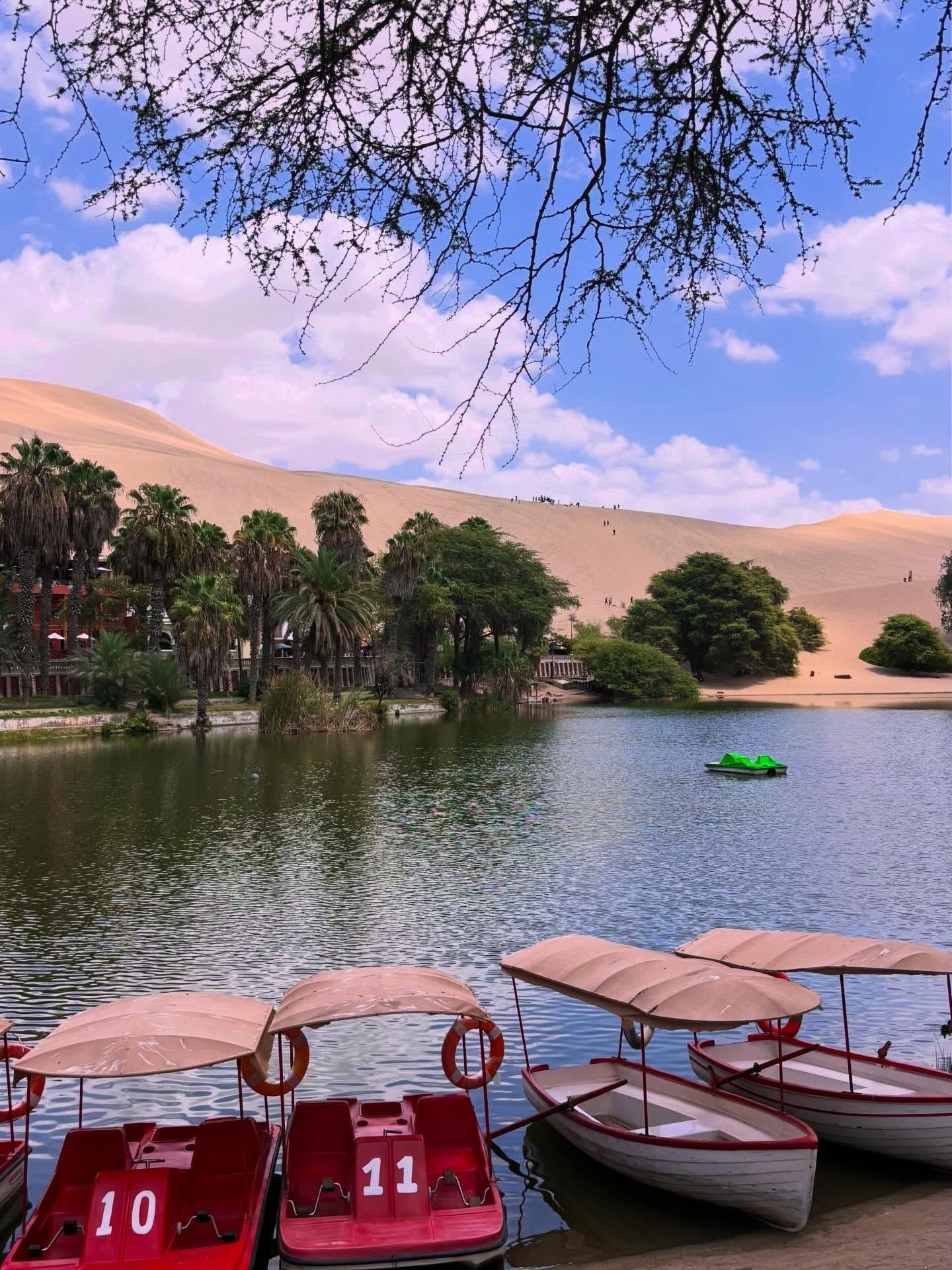
Local Quechua mythology explains the creation of the oasis through the legend of a heartbroken princess. The name Huacachina translates to "the woman who cries" or "hidden lagoon." According to the most prominent oral tradition, a native princess fled into the desert while mourning the death of her lover. When a hunter surprised her, she dropped her hand mirror. The shattered glass transformed into the green lake, and the folds of her fleeing tunic became the surrounding sand dunes. Statues of the princess now stand along the village boardwalk, and residents claim she still lives in the lake as a mermaid.
Beyond the mythology, the oasis represents a crucial economic engine for the Ica region. The transition from an exclusive 1960s medical resort to a modern adventure destination completely altered the local workforce. Hundreds of families in nearby Ica rely on the daily influx of tourists. They operate taxis, maintain the V8 buggy engines, and manage the hostels. The village provides a basecamp for exploring broader regional traditions. A 15-minute taxi ride takes visitors to historic wineries like Bodega El Catador. Here, local producers ferment sweet wines and distill pisco using methods dating back centuries. Distillers crush the grapes and ferment the juice before distilling it in copper alembics.
The nearby Regional Museum of Ica houses ancient Paracas and Nazca artifacts, grounding the modern tourist hub in deep pre-Columbian history. Tourists return from the vineyards to spend the night in canvas tents equipped with full beds and electricity, escaping the noise once the day-trippers leave. Visitors can support the local ecology directly by volunteering with Eco Dunas Huacachina, an organization dedicated to removing single-use plastics from the protected conservation area. Coordinate with the group in advance to join a morning cleanup crew on the dunes.
ワカチナは、南米大陸全体で唯一の自然に形成された砂漠のオアシスです。
20世紀半ば、医師たちは喘息やリウマチの治療として、ラグーンの泥で入浴することを推奨していました。
周囲のイカ砂漠の年間降水量は約2ミリメートルです。
地元の伝承によると、悲しみに暮れたケチュア族の王女が人魚に変身し、今もその緑色の水の中に住んでいると言われています。
村を取り囲む砂の壁は高さ500メートルに達し、エンパイア・ステート・ビルよりも高くなっています。
村全体にATMが一つもないため、訪問者は近くのイカから現金を持参する必要があります。
政府は周囲の砂丘の2,407.72ヘクタールを地域保全区域として保護しています。
いいえ。水は停滞しており、藻類が繁殖しています。病気を避けるため、代わりにパドルボートをレンタルするか、ホテルのプールを利用してください。
標準的な2時間のグループツアーは18ドルから25米ドルです。プライベート車両は100ドルから195米ドルです。
リマからイカまでバスで4時間半移動し、そこからタクシーで15分でオアシスに到着します。Peru Hopのような直行の観光バスを利用すれば、ホテルまで直接送迎してもらえます。
6歳から14歳の子供はアクティビティを楽しめますが、標準的なバギーの安全ハーネスは小さな幼児にはフィットしません。小さなお子様連れの場合は、プライベートツアーを予約し、速度を落とすよう依頼することをお勧めします。
急勾配や高速走行のため、乗車には固有のリスクが伴います。規制されていない路上販売のツアーは適切な保険や安全基準を満たしていないため、必ず認可を受けた業者で予約してください。
16時から18時の時間帯が最高のコンディションです。砂の温度が下がり、砂漠に沈む夕日を眺めることができます。
村への入場は完全に無料です。公式のデューンバギーやサンドボードのアクティビティを予約する際にのみ、地方自治体の税金を支払う必要があります。
つま先が隠れるスニーカー、軽量のズボン、通気性の良い重ね着を着用してください。深刻な砂による摩擦火傷を防ぐため、ショートパンツやビーチサンダルは避けてください。
ほとんどの旅行者は1〜2日滞在します。主要なバギーやサンドボードのツアーは半日で完了できます。
事前の公式な許可なしにドローンや航空機を飛ばすことは厳しく禁止されています。商業撮影には地方自治体からの特定の許可が必要です。